
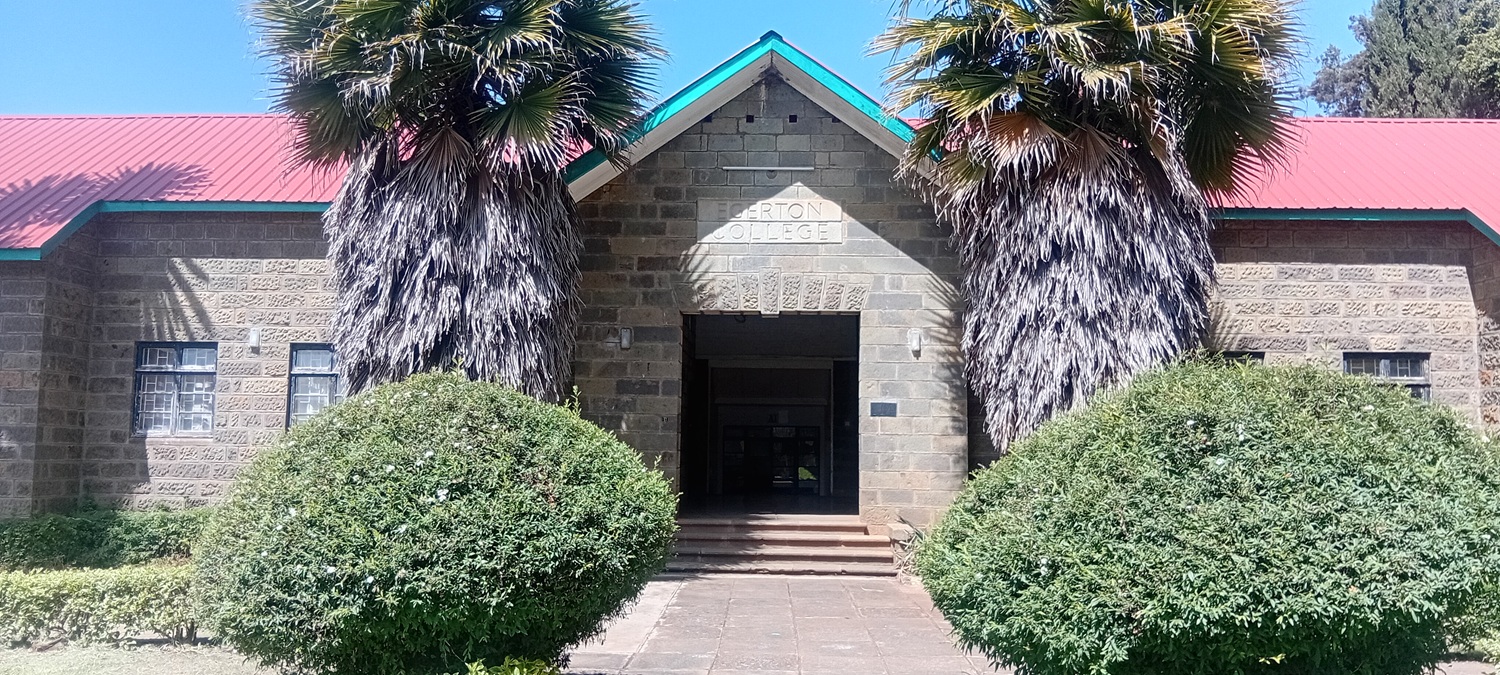
Historical Background
Egerton University is the oldest institution of higher learning in Kenya. It was originally founded as a Farm School in 1939 by Lord Maurice Egerton of Tatton, a British national who settled in Kenya in the 1920s.
The school was upgraded to an Agricultural College in 1950 offering diploma programmes, with the formal Egerton Agricultural College Ordinance enacted in 1955. Following a major expansion funded by the Government of Kenya and USAID in 1979, it was gazetted as a constituent college of the University of Nairobi in 1986.
Charter Status: Formally established as an independent University through an Act of Parliament in 1987, the institution was fresh-chartered in 2013 under the repealed and replaced Universities Act No. 42 of 2012.
Campuses
The academic infrastructure is distributed across specialized campus centers offering diploma, undergraduate, and postgraduate options:
- Njoro Main Campus (HQ): Houses the Faculties of Agriculture, Arts & Social Sciences, Education & Community Studies, Engineering & Technology, Environment & Resources Development, Science, and Veterinary Medicine & Surgery. It also hosts the Boards of Undergraduate, Postgraduate, and Field Attachment studies.
- Nakuru City Campus College: Comprises the core Faculties of Commerce and Health Sciences.
- Kenyatta Campus: Located six kilometers southeast of Njoro Campus, hosting the dedicated Centre for Capacity Building.
Staff & Student Population
The university currently maintains an operational establishment of 589 academic staff and 1,352 non-academic staff. This dedicated team serves an active student population consisting of 17,928 undergraduate learners and 560 postgraduate students. Through these tracks, the university successfully graduates approximately 3,000 students annually.
Research & Policy Analysis
Beyond mentoring Chuka, Kisii, and Laikipia into fully independent chartered universities, Egerton drives national policy via the Tegemeo Institute of Agricultural Policy and Development (originally the Policy Analysis Matrix project).
Tegemeo conducts critical research and micro/macroeconomic outreach on:
- Farming, transport, processing, and trade frameworks.
- Commercialization, financial growth, and national food security.
- Environmental sustainability of agricultural networks.
On-going Research Hubs
The university hosts 86 ongoing research projects funded by international consortia and the National Research Fund (NRF):
- MaMaSe Initiative: Mau Mara Serengeti Sustainable Water Initiative funded by DGIS.
- ILINOVA & InCIP: Participatory management of indigenous livestock and chicken improvement strategies.
- Value Chain Development: Dairy Chain systems and Cassava value chain upgrading in ASALs of Nakuru County.
- Strategic Grants: USAID Dryland Cereals/CRP Legume Project, SCARA, and RUFORUM high-quality seed potato systems.
Capacity Building & Chairs
Through global funding windows, the university runs elite training initiatives including TAGDev, the World Bank-backed CESAAM (Centre of Excellence in Sustainable Agriculture and Agribusiness Management), and international Masters in Limnology (LWM).
Special assignments and international linkages hosted on site include:
- UNESCO: Chair in Bioethics and Regional Documentation Centre.
- CMRT Centre: Joint crop management training with KALRO and CIMMYT.
- Confucius Institute (2010): Promoting Chinese culture, language, and technology transfer.
- Vision 2030 Anchors: AgroScience and Technology Park, African Virtual University (AVU) hubs, and the Rehabilitation of Njoro River.