
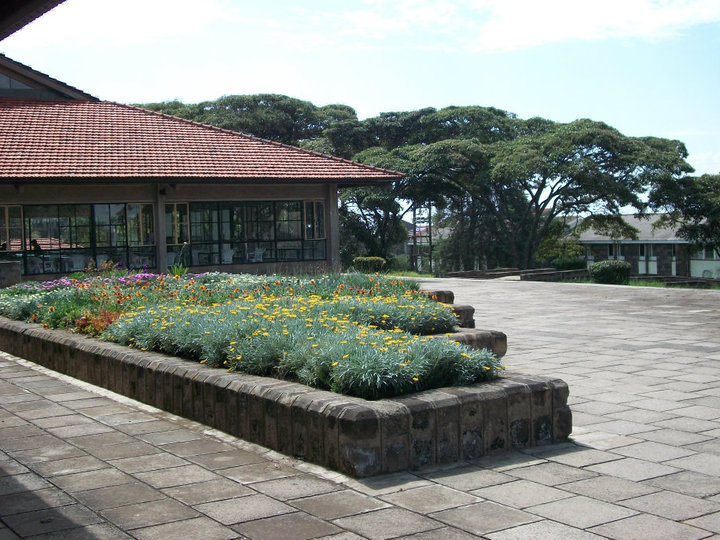

catering department

Catering is a Hospitality Department charged with responsibilities of offering essential catering services first and foremost to student, University employees, University guests and walk- in – visitors. 

The Department is under the Directorate University Welfare Services.Before 1993, the department was a free food provider with cyclic menus. 

In 1996, the department became an Income Generating Unit and a PAY AS YOU EAT (PAYE) cafeteria system was adapted to date. A customer selects and pays for the meal before the service is done.

Catering Department Units


  • Mara Restaurant: This is the largest unit comprising of three spacious restaurants that include:
    • Simba Restaurant: A staff cafeteria with a sitting capacity of 500 people.
    • Chui and Kiboko: Both are student cafeterias, each with a sitting capacity of 500 students.
  • JF Kennedy Restaurant: Located near Mama Ngina ladies hostel with a sitting capacity of 500 people.
  • Tsavo Restaurant: Situated at the Faculty of Arts building with a sitting capacity of 64 people.
  • Smart Cafeteria: Situated next to the new hostels and Maringo, with a sitting capacity of 100 customers.

Vision

A world Class Hospitality Entity.

Mission

To Attain World Class Standards by Rendering High Quality Catering Services to our Customers.

Objectives


  • To provide high quality food and efficient services to customers continuously.
  • To increase and retain the number of customers by 2% each year.
  • To provide affordable meals to customers continuously.

Core Activities


To Provide Catering Services to students, staff and University visitors.

Catering is a welfare department whose core activity is selling of meals to students, staff and visitors at affordable pocket friendly prices. Our Menus are based on popularity of dishes and raw materials availability.

Internal Quality Assurance System


  • Adherence to ISO 9001: 2008 Standards – as per the Catering department procedure – EU/AF/OP/30.
  • Adherence to the Catering department Service Delivery Charter and the University's standards.
  • Responsive to customer feedback as per customer surveys carried out by the department (e.g., recommendation of using cooking oil instead of solid fat. The department requested procurement to procure cooking oil as recommended).
  • Medical Examination to be carried out for all catering staff every 6 months.
  • Use of Cold rooms for storage of foods that require cold storage for better quality.
  • Ensure proper use and care of kitchen equipment to avoid any contamination.
  • Use of Standard recipes in food production frameworks.
  • Use of standard service equipment in portion control i.e., ladle and serving spoons.
  • Ensure Provision and use of protective clothing by the staff.
  • Inspection of food stuff by inspection and acceptance committee and involvement of stakeholders.

Monitoring & Evaluation

Performance Tracking & Compliance

  • Bench Marking: To offer excellent services by benchmarking with leading catering service providers in both Public and Private Universities.
  • Financial & Volume Auditing: Monthly and Quarterly reports on income, expenditure, and the number of customers served are used in monitoring and evaluating the performance of each unit.
  • Calibration: Calibration of weighing machines is done annually to ensure food items are received correctly from suppliers and issued for production accurately per recipe.
  • Statutory Obligations: Adherence to departmental procurement plans and other statutory obligations as per the Kenyan Constitution (Chapter 6 and Chapter 10).
  • Surveys: Customer satisfaction surveys are conducted periodically to establish customer satisfaction levels.